Kom Ombo
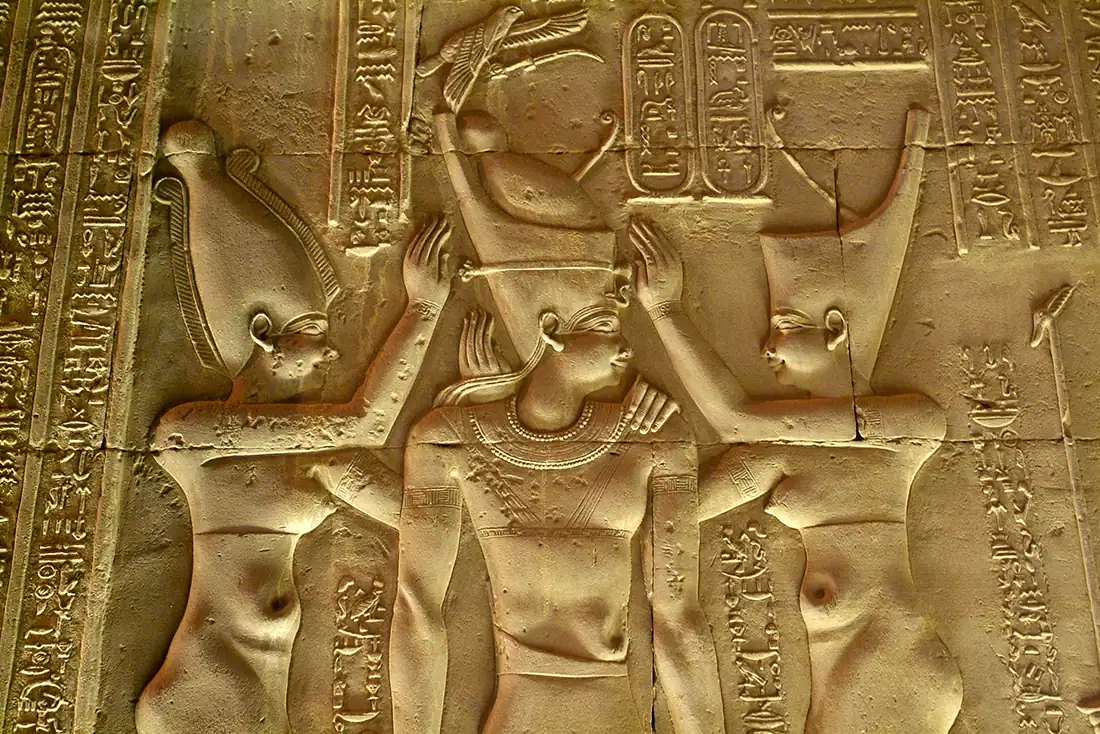
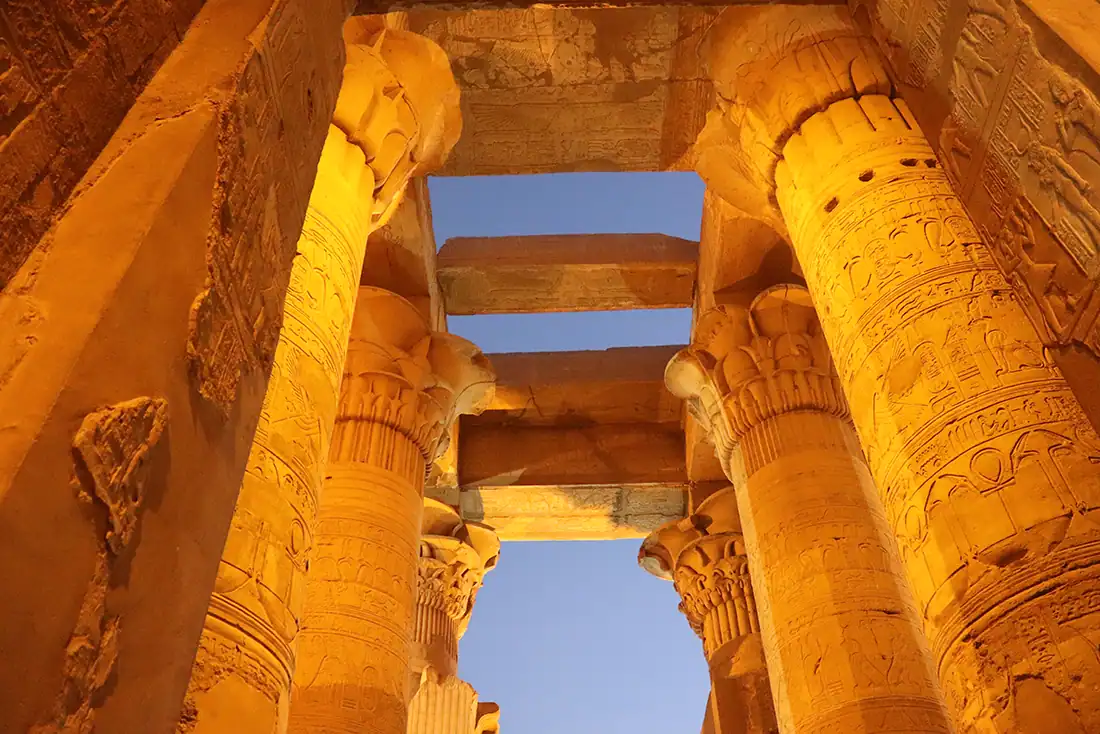
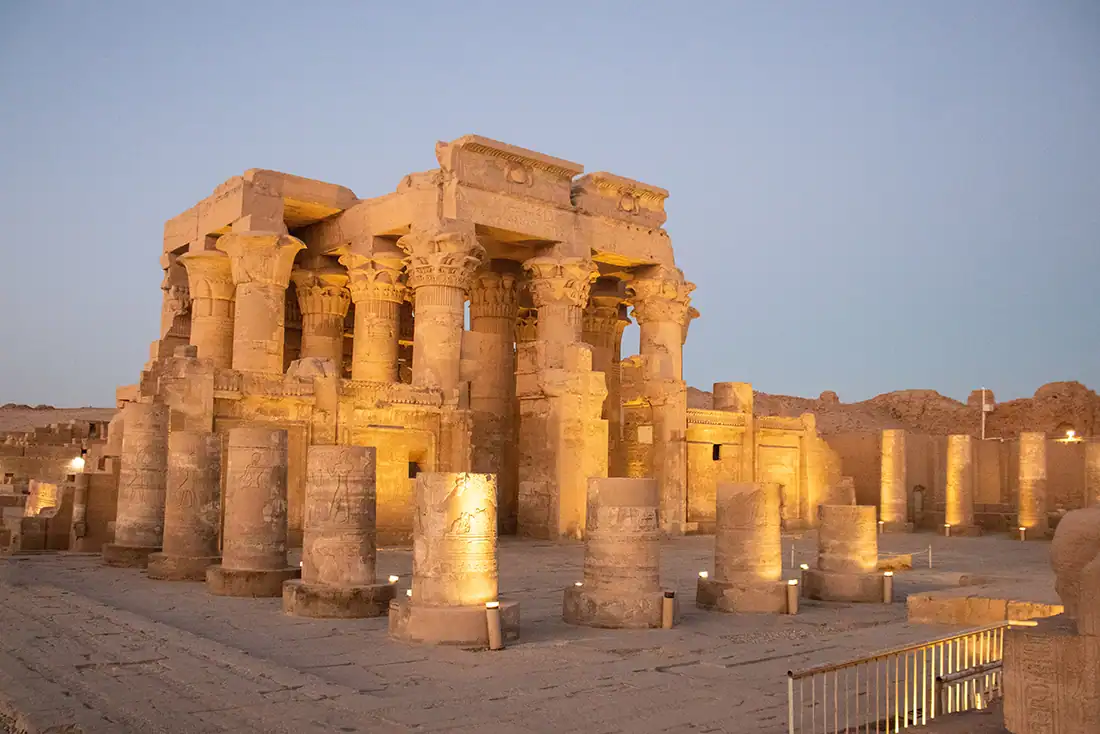
The Temple of Kom Ombo is uniquely dedicated to two gods: Sobek, the crocodile-headed god of fertility and protection, and Horus the Elder (Haroeris), the falcon-headed god of the sky and healing. Built during Egypt’s Ptolemaic period (around 180–47 BCE), this temple stands apart for its perfectly symmetrical design, with twin entrances, halls, and sanctuaries—one for each deity—symbolizing balance and harmony.
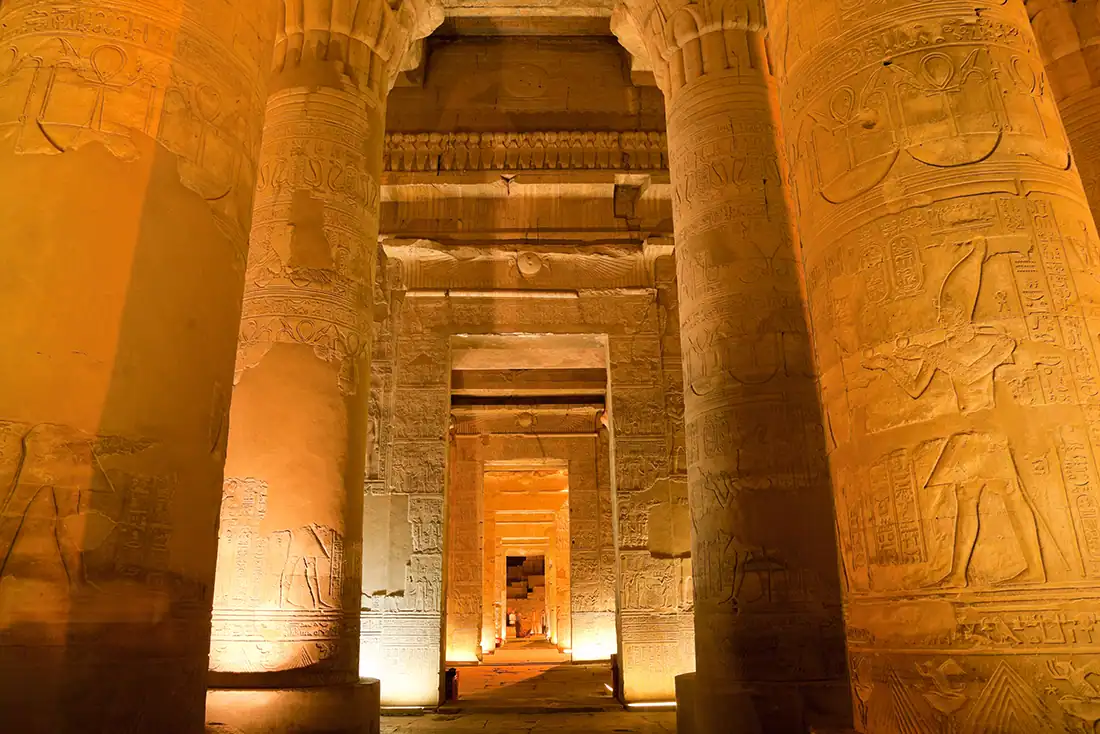
Sobek represented the power and fertility of the Nile, while Horus the Elder embodied strength, healing, and the eternal order of the heavens. The temple’s walls feature intricate reliefs, including scenes of pharaohs making offerings to the gods, depictions of surgical instruments thought to reference healing rituals, and the lioness goddess Tefnut, symbol of moisture and life.
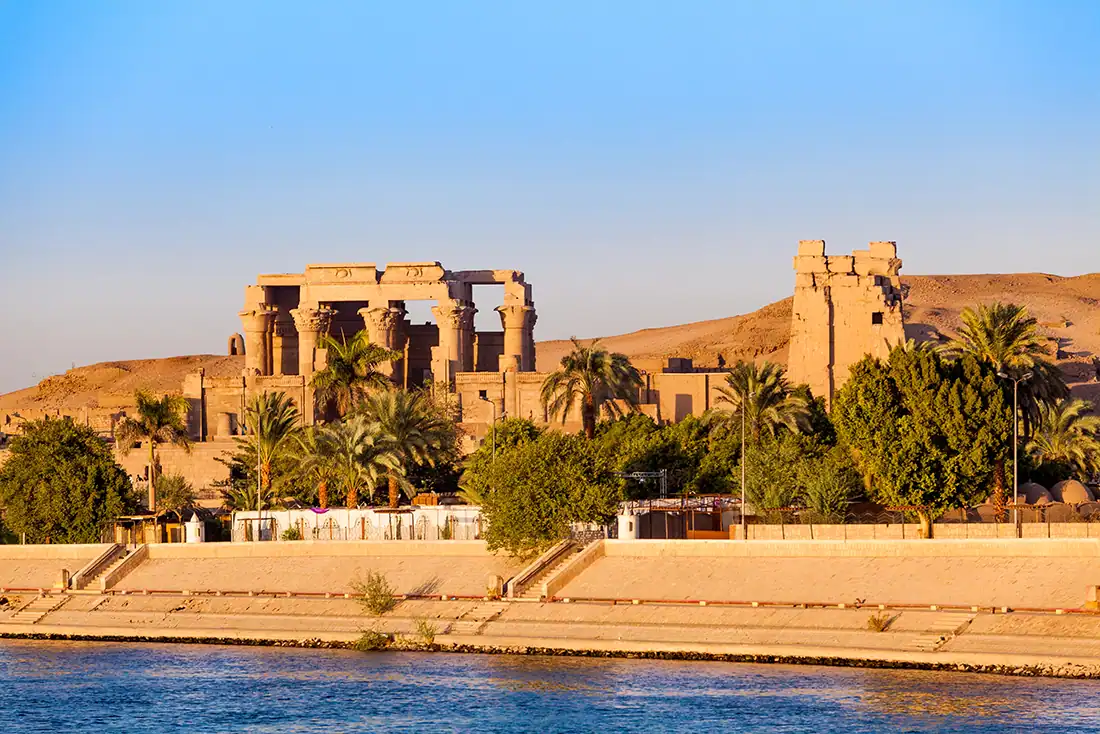
Located about 24 miles (40 km) north of Aswan, Kom Ombo overlooks a sweeping bend in the Nile—an ideal position to watch over passing river traffic. Excavations led by Jacques de Morgan in the 1890s helped restore the site after centuries of flooding and looting. More recent finds include a small sphinx statue, painted wall fragments, and a Roman bust of Emperor Marcus Aurelius.
From above, Kom Ombo is surrounded by a patchwork of lush green farmland bordered by the vast Egyptian desert. The surrounding community includes Nubian families who resettled here after the construction of the Aswan High Dam construction moved to the area to farm.