Edfu & Esna
Edfu
Edfu is situated on the west bank of the Nile River between Esna and Aswan. The community of approximately 55,000 people is surrounded by farmland. From the sky, the numerous fields represent a magnificent patchwork quilt.
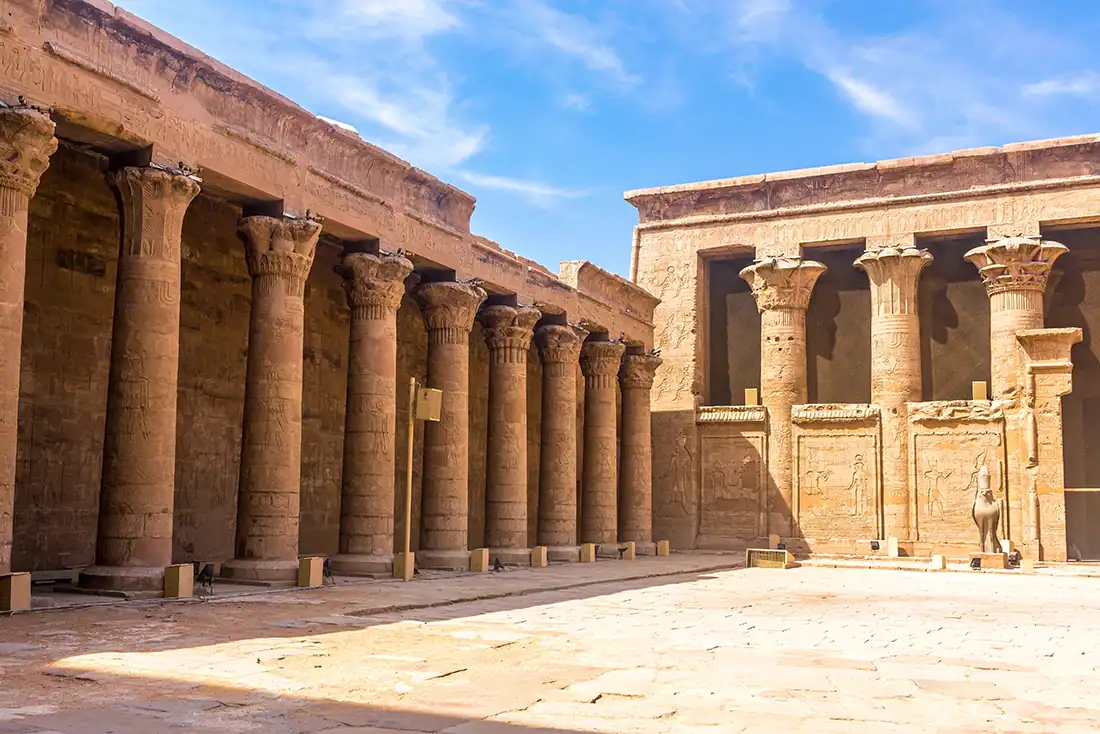
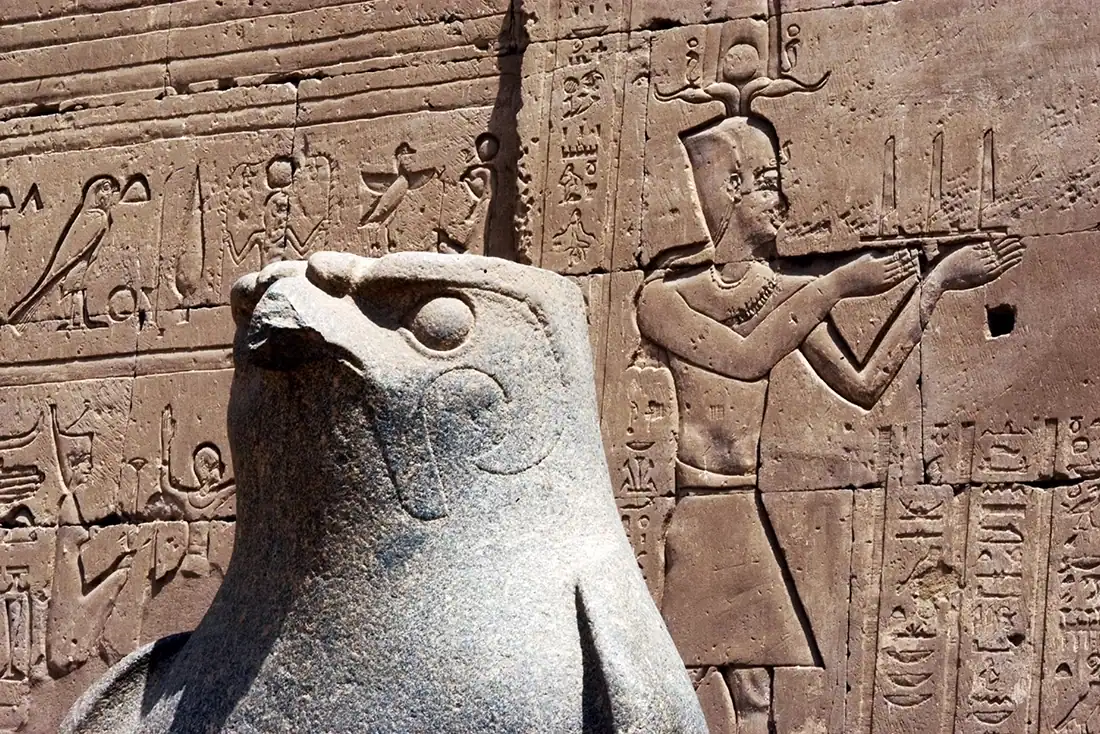
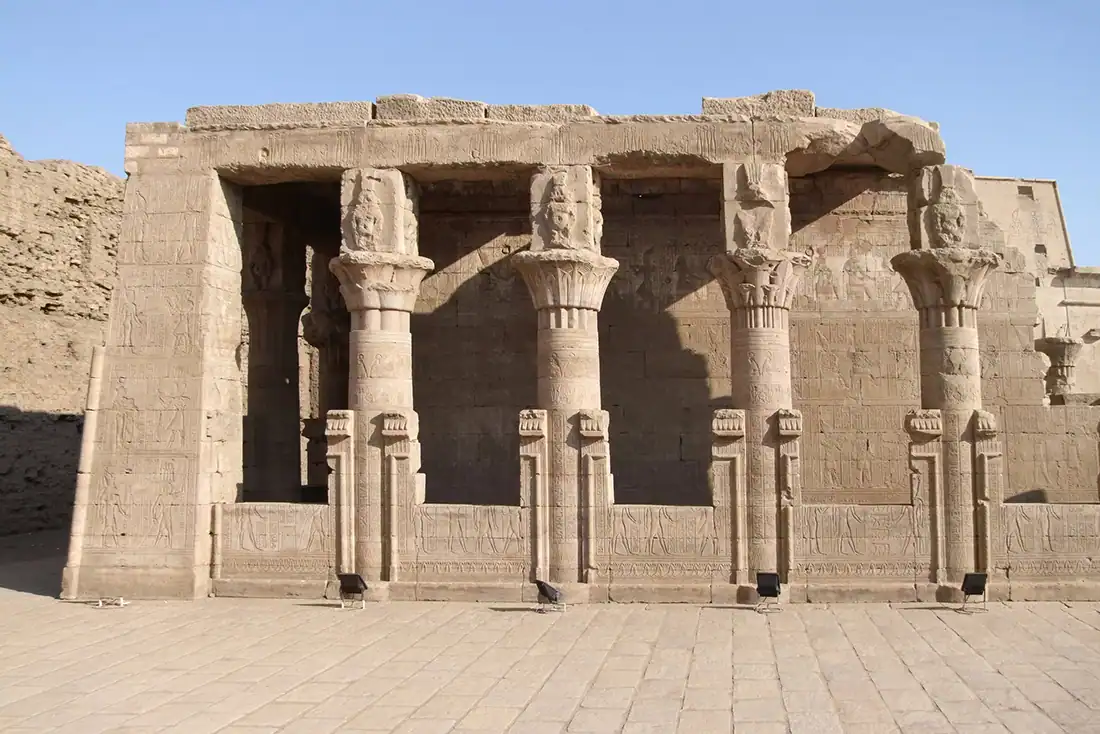
Edfu is famous for its Ptolemaic temple dedicated to the falcon-headed god Horus.
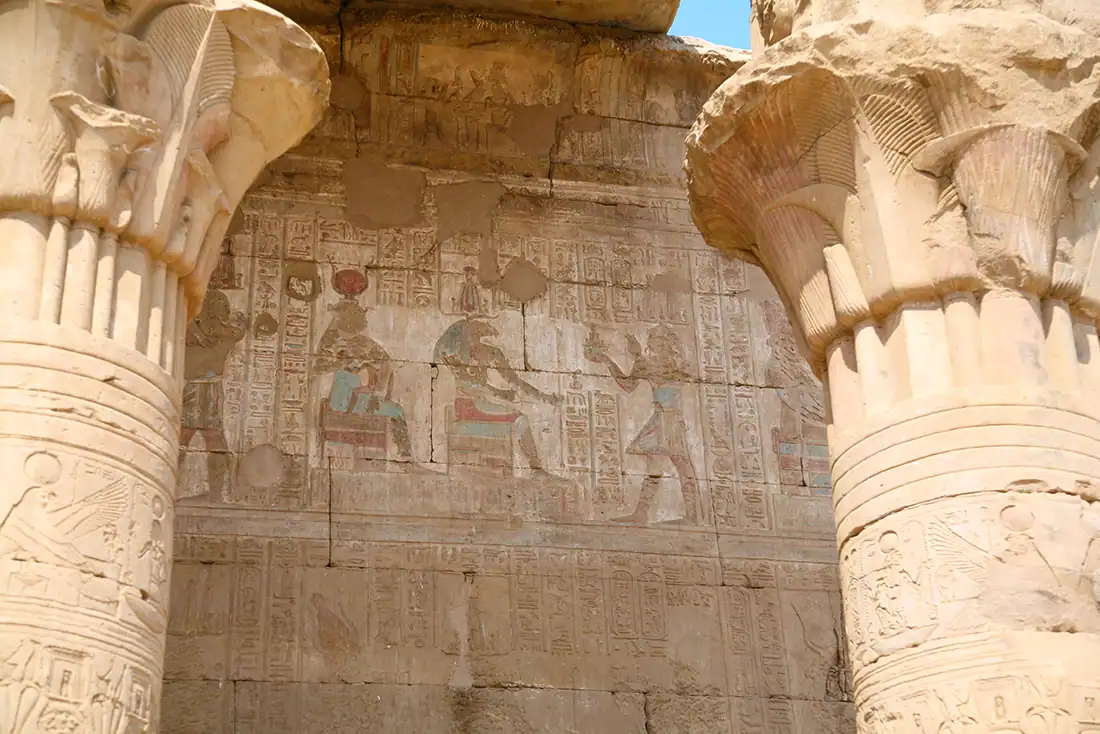
Architectural highlights of the temple include pylons – two large structures separated by a gateway. Here, scenes portray Horus defeating the god Set in battle – the triumph of good over evil. Other features include hypostyle halls, which are roofed structures supported by columns, a peristyle courtyard, an open space surrounded by columns, and hieroglyphics.
A joint archaeological mission between the Supreme Council of Antiquities and the University of Würzburg in Germany began in 2021, resulting in new insights into the religious rituals practiced at the Edfu Temple by priests of that era.
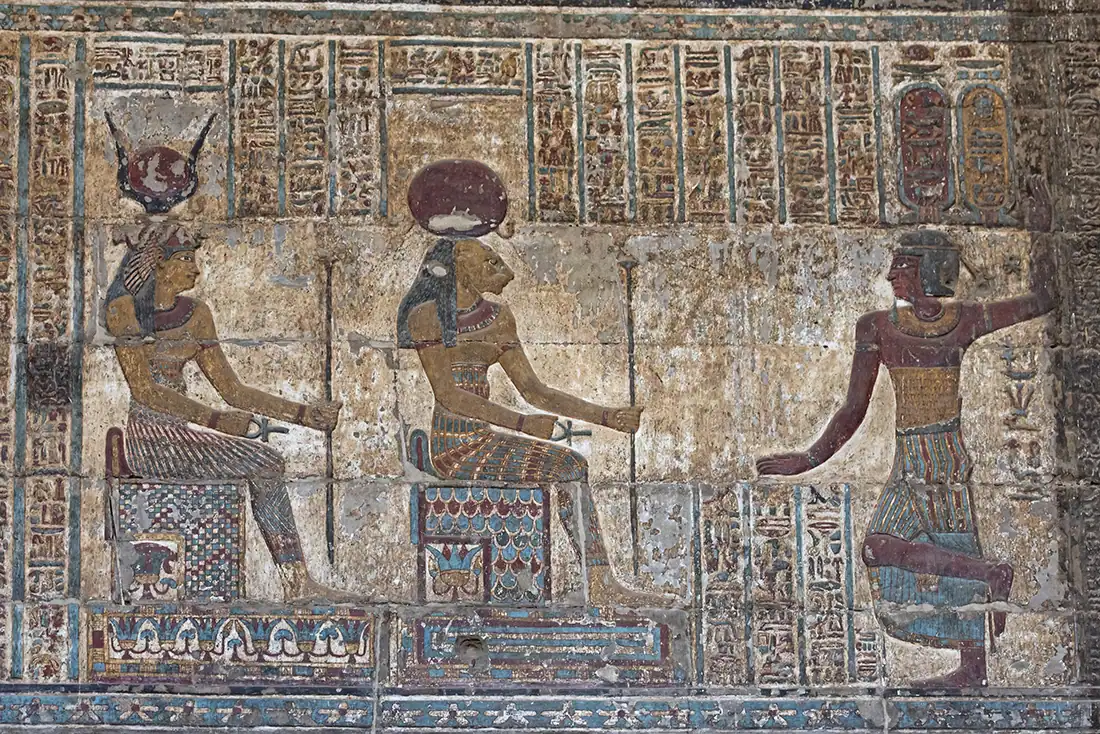
The restoration project revealed for the first time the original colors of the inscriptions in the temple’s sacred inner sanctuary – vibrant scenes and inscriptions in demotic script left by priests. The discovery also included traces of golden hues used to embellish the raised inscriptions of royal regalia and emblems, as well as the figures of deities.
Edfu is also home to Tell Edfu. A tell is a mound created when multiple ancient settlements were established at the exact location under various rulers; archaeological digs serve to discover the various settlement layers, document and preserve artifacts of the different time periods.
Esna
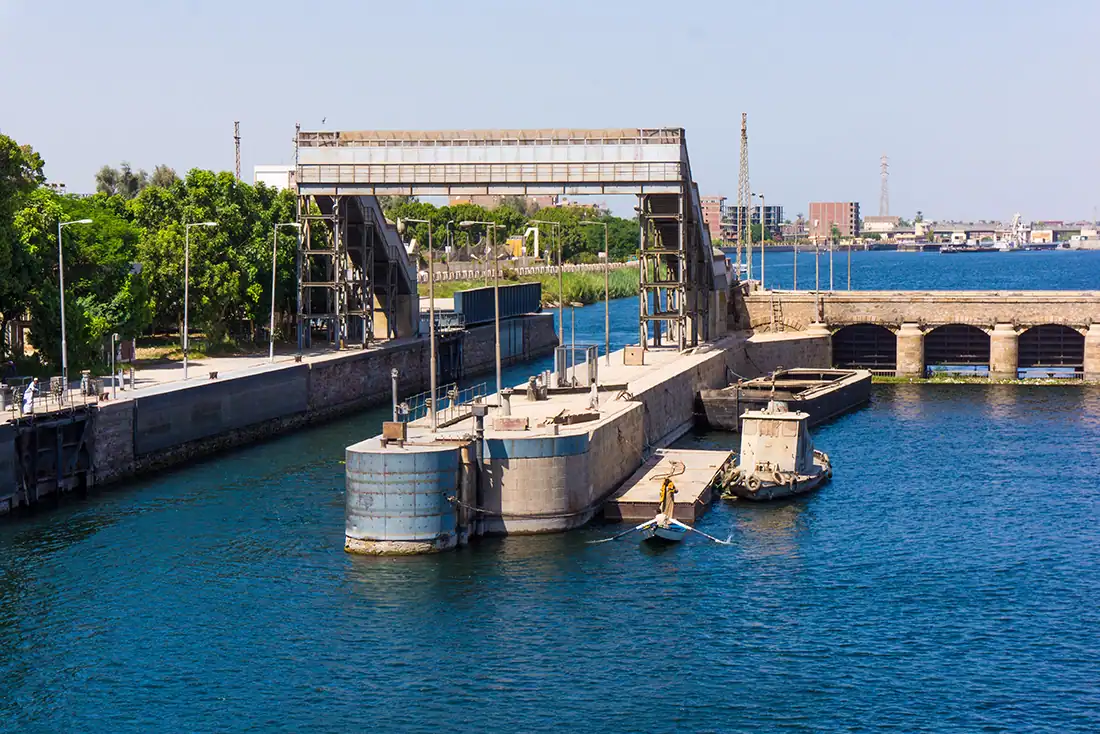
Esna is famous for its lock and dam system on the Nile River, a major transportation route, which allows boats to navigate up or downstream. Visitors gather to watch vessels transit the locks. Here’s how it works: a ship enters a lock and the gates are closed. Depending on the direction of travel, the water is either added or lowered to match the water level on the river where the vessel will soon travel. Once at the appropriate water height of the river, the locks open and the ship exits.
The locks were initiated during Ptolemaic rule (305-30 BCE) and updated over time.
Esna is famous for its lock and dam system on the Nile River, a major transportation route, which allows boats to navigate up or downstream. Visitors gather to watch vessels transit the locks. Here’s how it works: a ship enters a lock and the gates are closed. Depending on the direction of travel, the water is either added or lowered to match the water level on the river where the vessel will soon travel. Once at the appropriate water height of the river, the locks open and the ship exits. The locks were initiated during Ptolemaic rule (305-30 BCE) and updated over time.
Esna Temple
Built of red sandstone, the Temple of Khnum in Esna is dedicated to the ram-headed god of creation and guardian of the Nile’s life-giving floods. Khnum was worshiped throughout Upper Egypt, especially in Esna and Elephantine to the south.
The temple we see today dates to the Ptolemaic and Roman periods (around 180 BCE – 250 CE). After Cleopatra VII’s death and the end of the Ptolemaic dynasty, Egypt became a Roman province, and Esna continued to thrive as an important religious center.
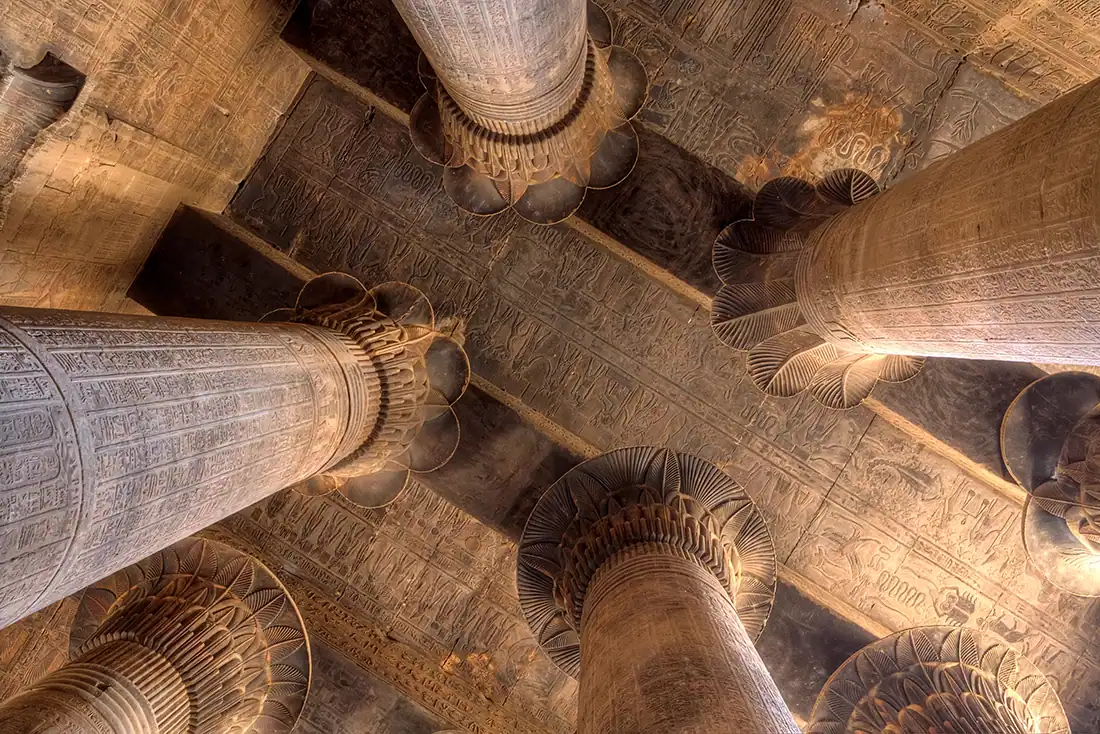
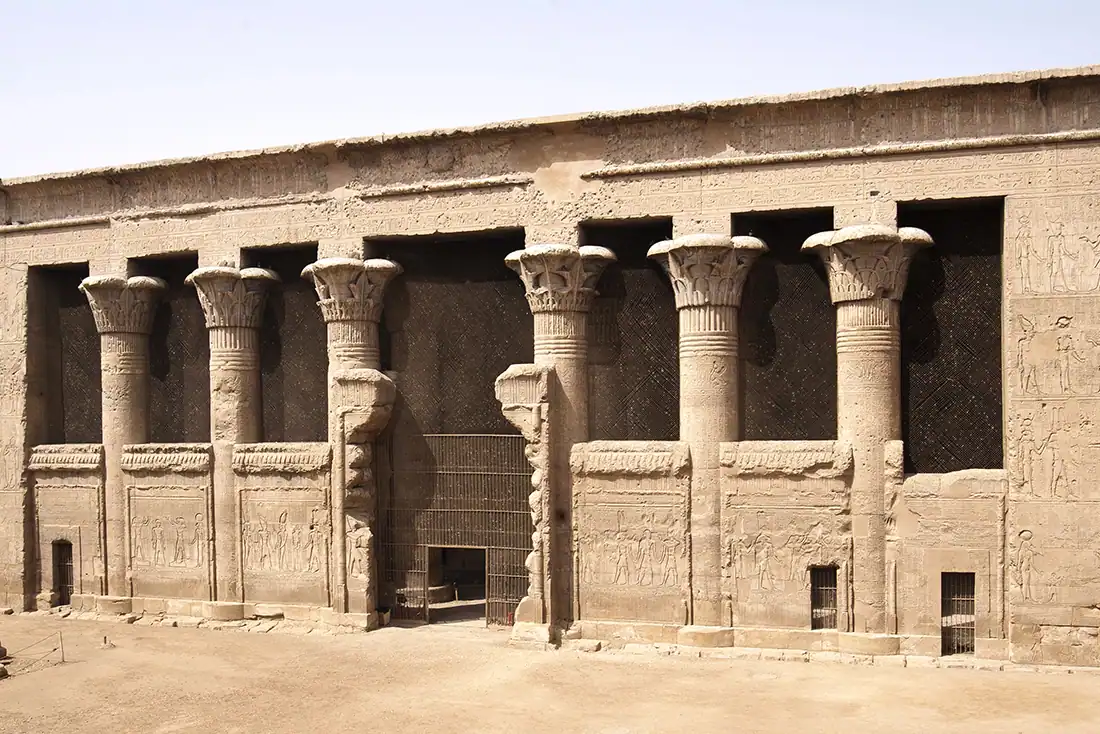
Located about 200 m from the Nile and 9 m below modern street level, only the grand hypostyle hall remains visible today. Its 24 columns—each with intricate floral capitals—are covered in detailed reliefs of pharaohs and emperors making offerings to the gods.
A recent restoration project revealed vibrant ceiling paintings depicting Nut, goddess of the sky, and colorful constellations representing the ancient Egyptian view of the heavens.
Surrounded by fertile farmland, Esna is a charming riverside community where visitors can also browse the Al-Qisariyya Market, a traditional bazaar known for handmade crafts and textiles.
Other Attractions
Other attractions in Edfu
- Gebel el-Silsila or Gebel Silsileh
- Temple of el-Kanais
- Tell Edfu
- Tombs of El Kab or Elethya
Other attractions in Esna
- Al-Qisariyya Heritage Street Market
- Amin Bek Hajjaji
- Bakkur Oil Press
- Church of the Blessed Virgin Mary
- KIng Faruq Palace in al-Matanina